Main House – new
A Beautiful Construction
-

“If Proportion is the good breeding of architecture, symmetry, or the answering of one part to another, may be defined as the sanity of decoration.”
-
The design of the Main House combined Edith Wharton’s philosophies and astute knowledge of design and architecture, with the professional expertise of her architects Ogden Codman, Jr., and Francis L.V. Hoppin. The exterior of the mansion, completed by Hoppin, was based on Belton House, a 17th-century English country house in Lincolnshire. The expansive terrace, on the east façade, was an Italian-inspired enhancement requested by Wharton.

-

The Mount’s interior, designed by Wharton and Codman, is informed by classic Italian and French influences, and based on principles expressed in their book, The Decoration of Houses (1897). The fundamental premise of that influential work is that interior decoration cannot exist independent of structure; that “architectural features …are part of the organism of every house, inside as well as out.”


-

“The core of my life was under my roof, among my books and my intimate friends.”
-Edith Wharton
-
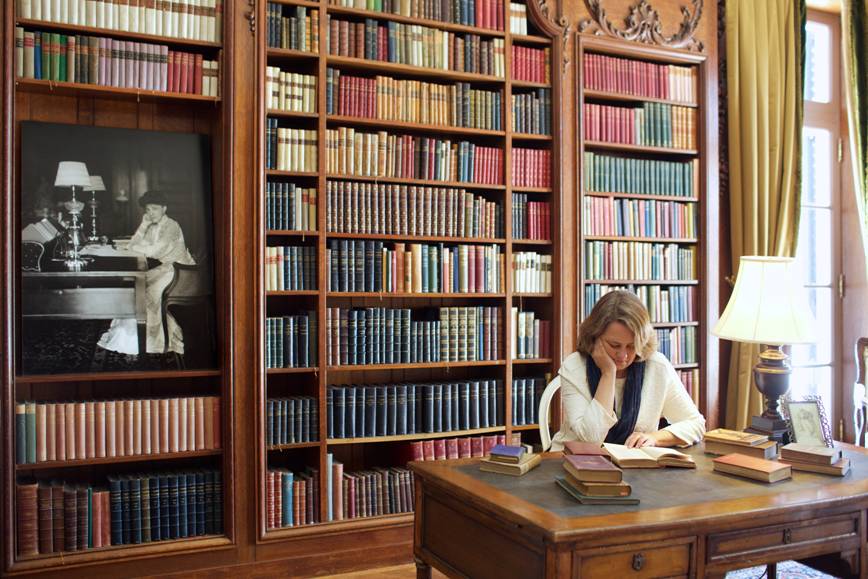
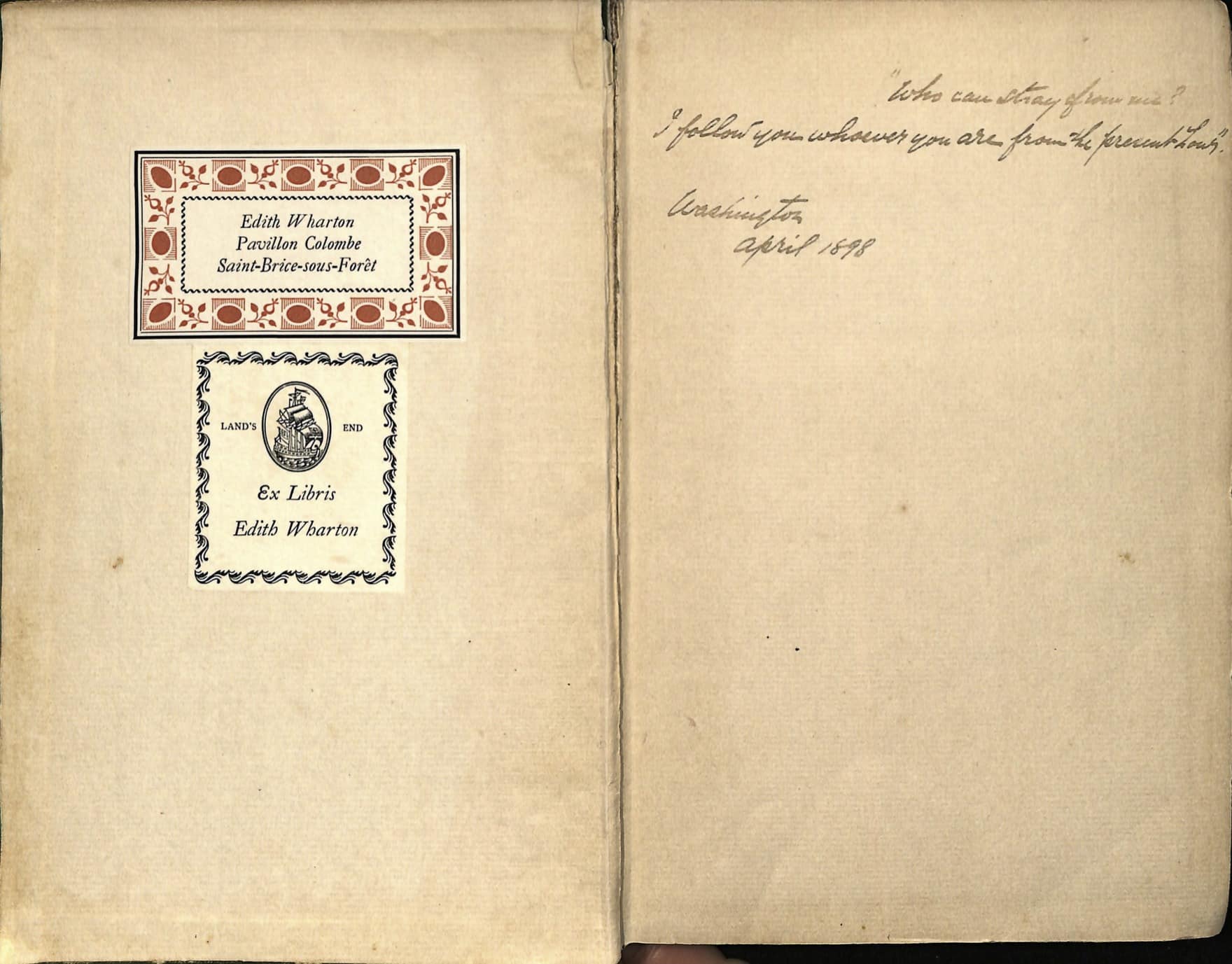
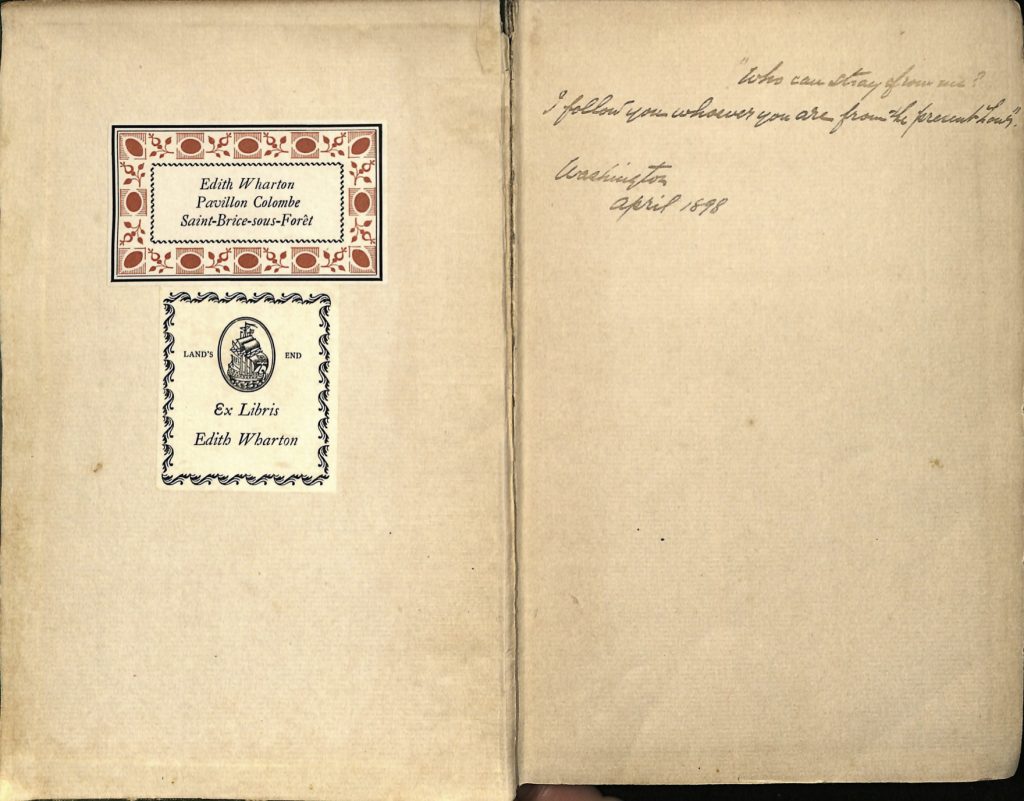
The books on the shelves of the library are from Wharton’s own personal collection, purchased by Edith Wharton Restoration in 2005. The collection contains books from every period of Wharton’s life, written in English, French, German, and Italian. Included are a significant number of Wharton’s own works, many with corrections penciled in. There are books written by friends, many containing personal inscriptions.
-

The range of subjects attests to Wharton’s wide-ranging curiosity. In addition to literature, gardening, and travel, there are numerous volumes on history, philosophy, religion, and science. Wharton often annotated her books – gently marking in pencil using ticks, check marks, underlining, and, very occasionally, words. In some books that are heavily marked, it seems almost as if one is following Wharton’s thoughts as she reads.
-
The collection has proven an invaluable tool in deepening our understanding of Wharton. Her personality springs from the pages of her beloved texts, and offers a new trove of information for the next generation of scholars, and storytellers.
Interesting in learning more? Take a private tour for a rare and wonderful glimpse into what Wharton was thinking, and feeling, over 100 years ago. For more information, e-mail Nynke Dorhout.